January
Winter Whites & Forced Bulbs
Paperwhites, amaryllis, and hellebores. Force hyacinth bulbs in water glasses on a windowsill and let their scent fill the room. Keep arrangements simple — a single stem in a bud vase is enough.
Seasonal Living
Gather, arrange, and live beautifully with flowers through every month of the year.
A Note Before You Begin
There is something quietly radical about bringing flowers into your home. Not for a special occasion. Not because someone gave them to you. But simply because you chose beauty today. This guide was made for the woman who wants to live with intention — to notice the season she is in and bring a little of it indoors. Read slowly. Come back to it every month. Let it become a rhythm.
How to Use This Guide
Each month includes a curated list of seasonal blooms, simple arranging tips, and ideas for living with flowers beyond the vase. You do not need to be a florist. You only need to be willing to slow down and notice what is growing around you.
January
Paperwhites, amaryllis, and hellebores. Force hyacinth bulbs in water glasses on a windowsill and let their scent fill the room. Keep arrangements simple — a single stem in a bud vase is enough.
February
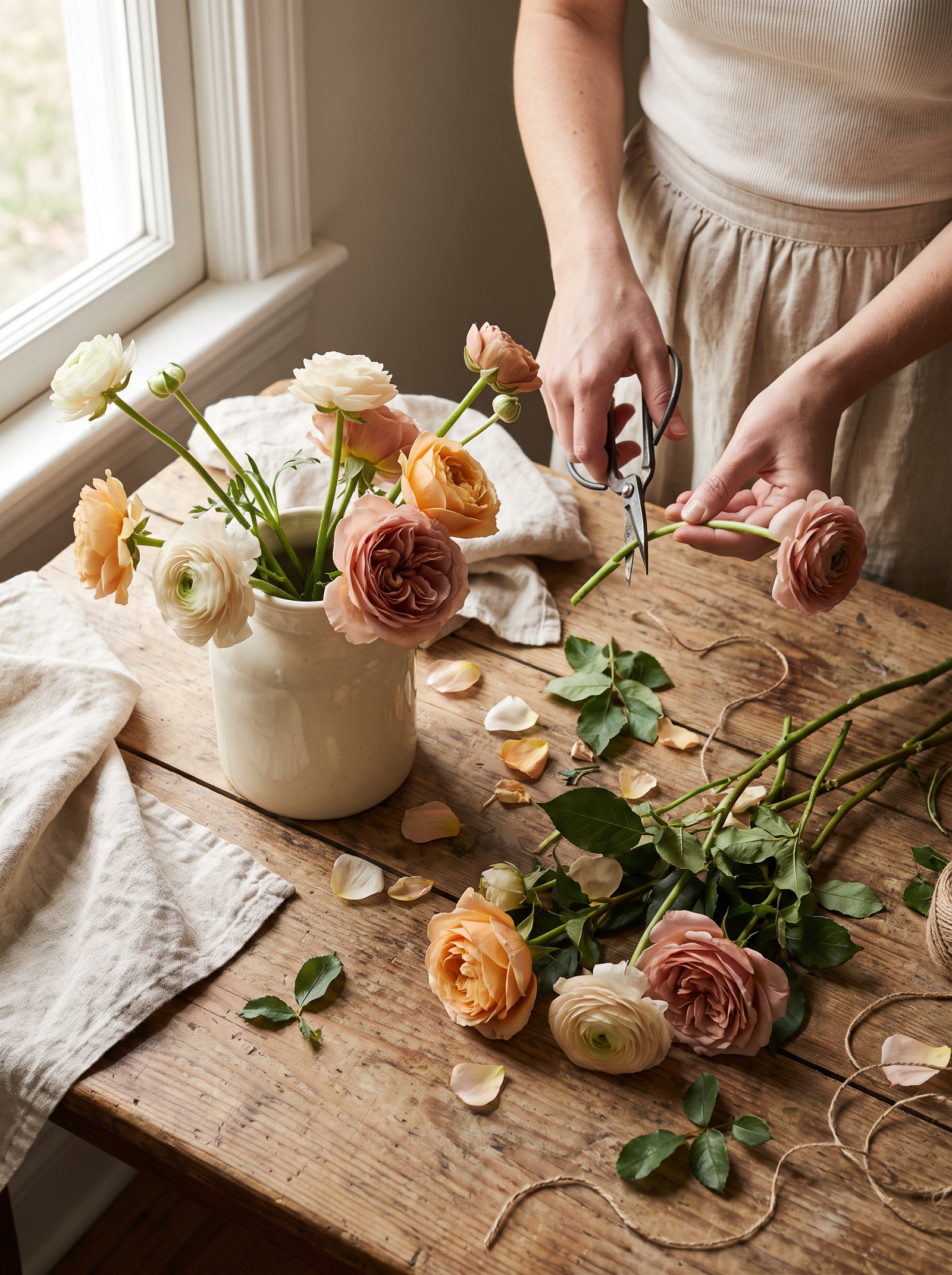
Ranunculus, tulips, and dried pampas grass. Mix one fresh stem with two dried to create arrangements that last for weeks. Blush and cream tones feel soft and wintery without feeling cold.
March
Daffodils, pussy willow branches, and anemones. Cut daffodils just as the buds begin to open and keep them in cool water. Branch clippings from the garden look beautiful in tall ceramic vases.
April
Peonies, lilac, and sweet peas. April is generous — gather armfuls and arrange loosely in pitchers and mason jars. Lilac bruises easily so trim the stems at an angle and change the water daily.
May
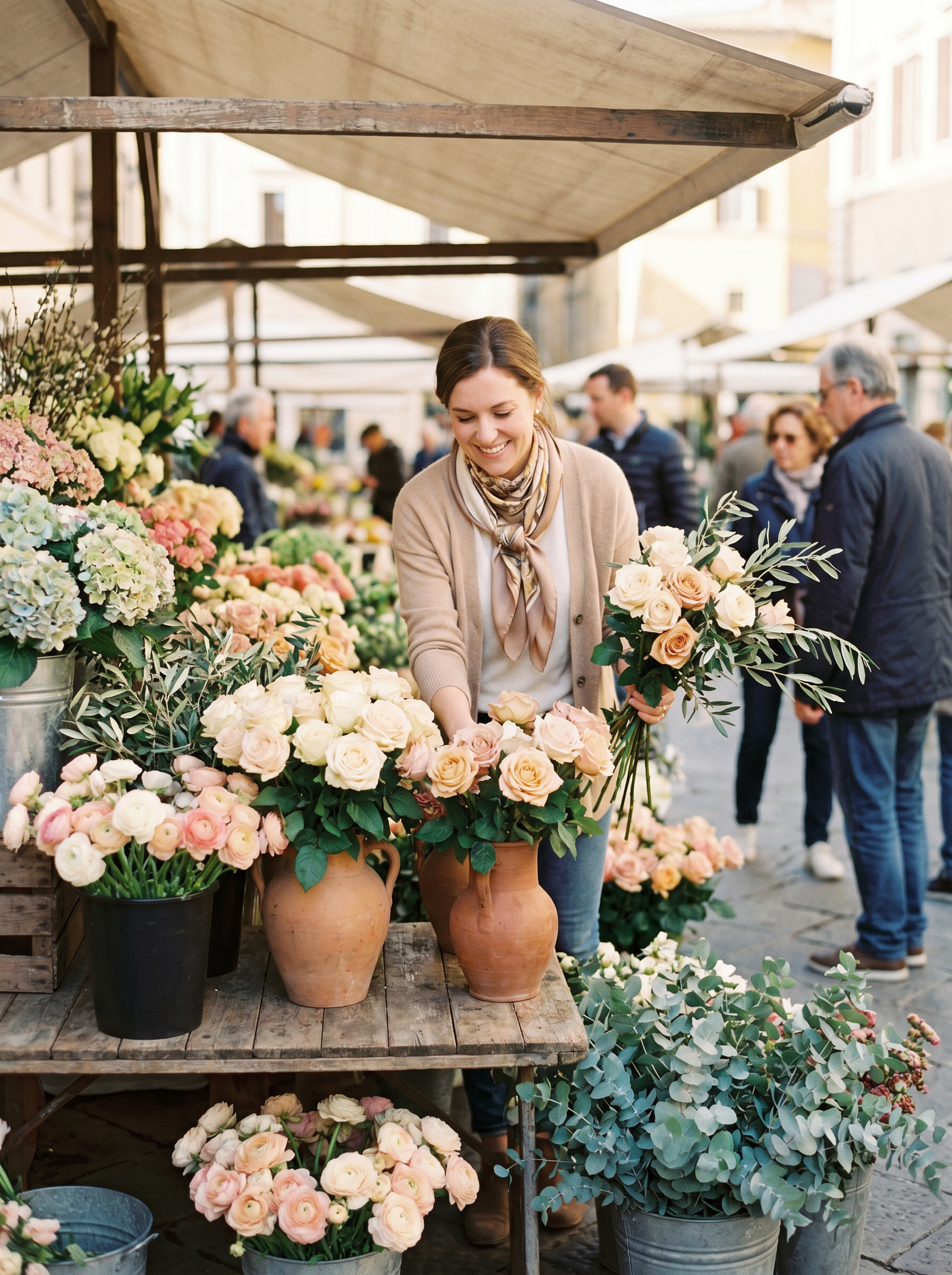
Garden roses, foxglove, and allium. May is peak bloom season — visit a local farm stand or cut your own. Mix tall architectural stems like foxglove with soft roses for a natural, unstructured look.
June
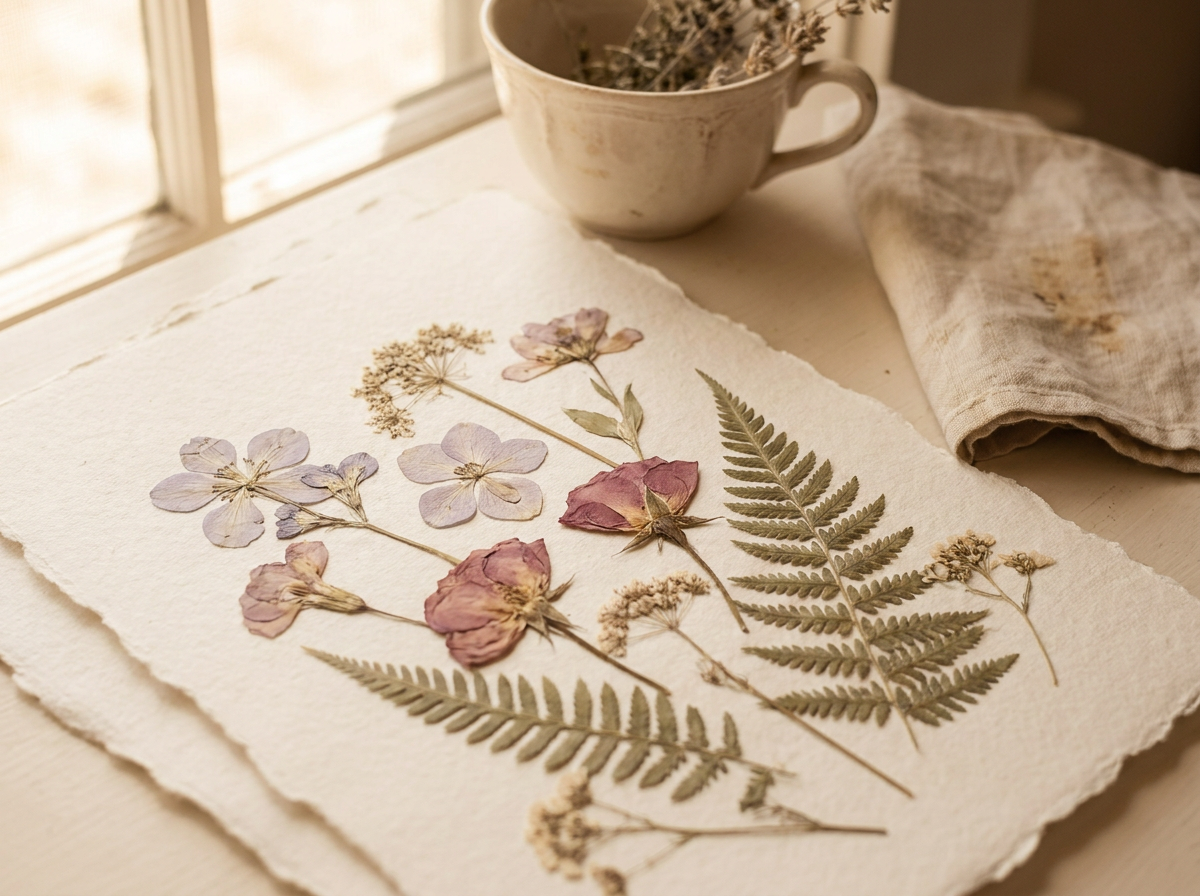
Lavender, chamomile, and echinacea. Gather wildflowers on morning walks and press extras between the pages of a heavy book. Lavender bundles hung upside down dry beautifully and scent a whole room.
July
Sunflowers, zinnias, and dahlias. Summer blooms are bold — lean into it. Mix warm oranges and deep reds in a wide-mouthed ceramic bowl. Change water every two days to keep arrangements fresh longer.
August
Dahlias, lisianthus, and grasses. August dahlias are at their peak — seek out a local dahlia farm if you can. Pair deep burgundy dahlias with soft cream lisianthus for an arrangement that feels like late summer light.
September
Roses, cosmos, and seed heads. September is a transition month — mix the last of summer's roses with early autumn seed heads and grasses. Let arrangements feel a little undone and wild.
October
Chrysanthemums, marigolds, and bittersweet branches. Bring the outside in — autumn leaves, acorns, and small gourds arranged alongside flowers feel deeply seasonal. Warm amber and rust tones are at home everywhere.
November
Dried hydrangeas, cotton stems, and eucalyptus. November invites stillness — build arrangements from dried and preserved stems that will last through winter. Eucalyptus hung in the shower releases its scent with the steam.
December
Pine, cedar, holly, and amaryllis. Gather evergreen clippings from the garden and layer them in bowls with pinecones and candles. A single amaryllis stem in a tall vase is one of winter's most elegant gifts.
Simple Arranging Principles
You do not need expensive vases or florist training to arrange flowers beautifully. Use what you have — a mason jar, a ceramic mug, an old milk bottle. Cut stems at an angle so they can drink. Remove any leaves that fall below the waterline to keep the water clean. Choose an odd number of stems — three or five always looks more natural than two or four. And above all, arrange for yourself, not for anyone else.
"To tend to flowers is to tend to yourself — both need water, light, and a little patience."
— Aster Haven
Keep This Guide Close
This guide is yours to keep. Print it and tuck it into your journal, save it to your phone, or bookmark this page so it is always one click away when the seasons change. Your resource library is always waiting for you.
⬇ Download Your PDF Guide